






J21S Open Back Inclinable Press: Tonnage, Specs and Buyer Guide
Release Time : 2026-11-16 View Count : 次The J21S open back inclinable press is a mechanical stamping press whose frame tilts backward, letting gravity discharge finished parts — a design that makes it one of the most practical presses for small and mid-volume metal forming.
What Is a J21S Open Back Inclinable Press?
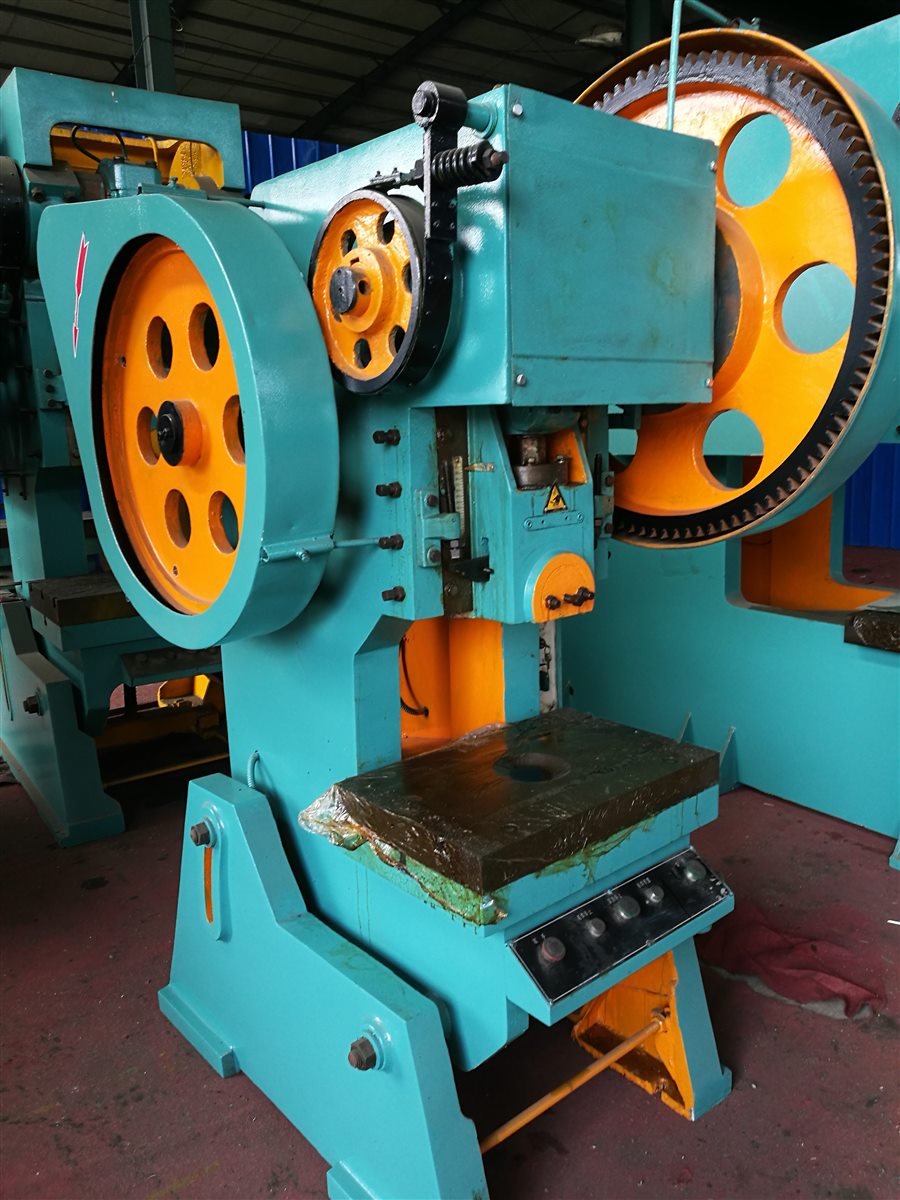
A J21S open back inclinable press is a mechanical power press with an open C-shaped frame that can tilt backward, typically to 30 degrees, so stamped parts and scrap fall clear of the die by gravity. "Open back" means the frame is open at the rear, allowing strip or coil stock to feed through from either side. "Inclinable" refers to the tilting body, which is why the specification tables for these machines list a body ting angle (tilting angle) in degrees — for example, 30 degrees on the J23-16T and J23-25T models.
The J21S variant differs from the J23 in one important way: the J21S series uses a fixed, deeper throat rather than a tilting body. In the J21S-16T, for instance, the distance between the slider centre and the machine frame is 420 mm, versus 120 mm on the equivalent J23-16T. That extra throat depth lets the J21S accept wider workpieces that cannot pass between the uprights of a standard open-back press.
MINGCHENG builds the J21S series in tonne ratings from 10T to 125T, covering nominal pressures from 100 kN to 1,250 kN.
How Does a J21S Press Work?
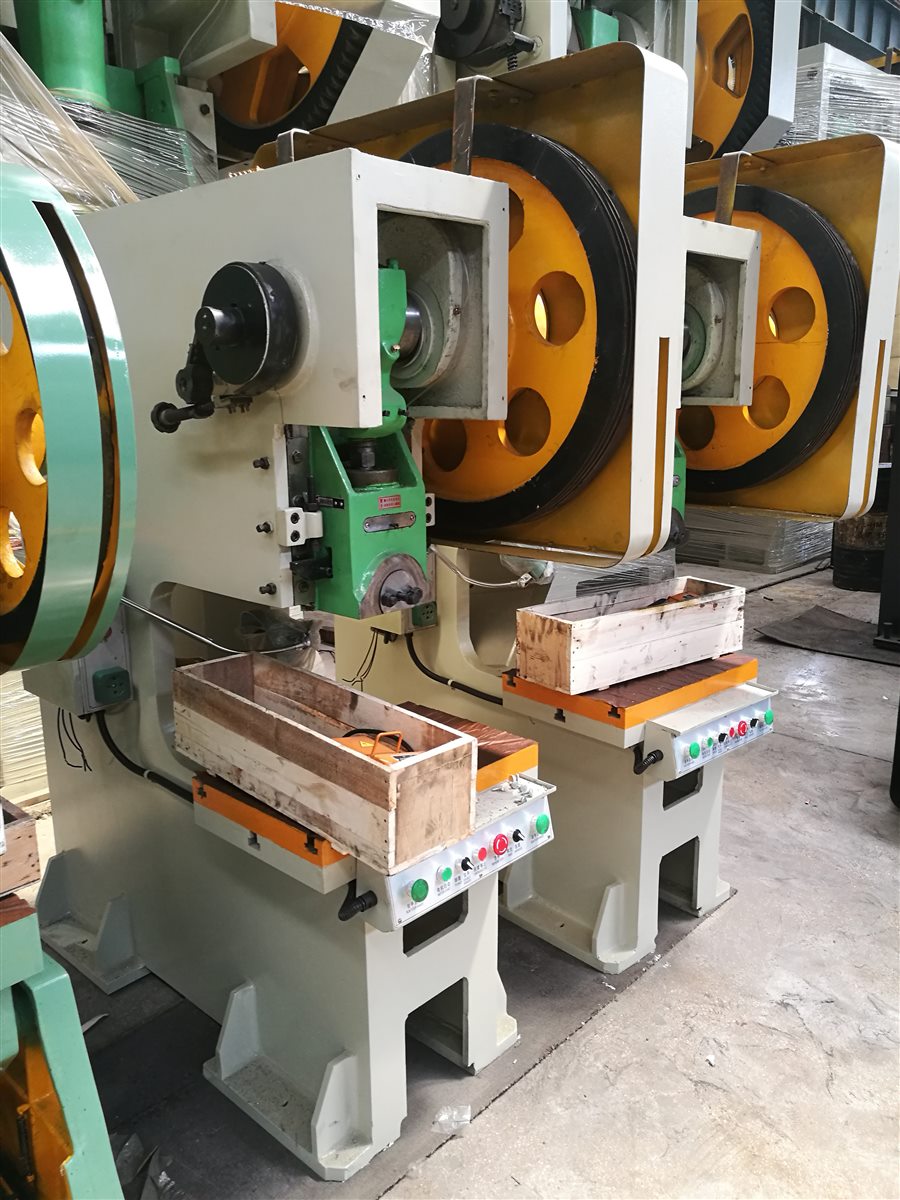
A J21S open back inclinable press converts rotary motor power into a vertical stamping stroke through a flywheel, clutch and crankshaft mechanism. The motor spins a flywheel; when the operator engages the clutch, the flywheel drives a crankshaft that pushes the slider down along its guideways. The die mounted on the slider meets the die on the workbench, forming, blanking or punching the sheet. A closing height adjuster — 35 mm on the J21S-16T, up to 100 mm on the J21S-100T and J21S-125T — sets how deep the slider descends, which is how operators match the press to different die heights.
Stroke rate is fixed by the crankshaft geometry: the J21S-16T runs at 130 strokes per minute, the J21S-63T at 55 strokes per minute, and the J21S-125T at 45 strokes per minute. Higher-tonnage presses run slower because each stroke moves more mass.
The inclinable frame is the practical payoff. Tilt the body and finished parts slide out the back without an operator reaching into the die area — a genuine safety and cycle-time benefit on progressive and blanking work.
Where Is the J21S Open Back Inclinable Press Used?
The J21S open back inclinable press suits any operation needing repeated, controlled stamping force on sheet metal up to a few millimetres thick. Five typical applications:
Blanking and punching of brackets, washers and mounting plates, where parts drop through the die and out the open back.
Forming and bending of small enclosures, clips and chassis components using single-station dies.
Progressive die stamping of connectors and electrical contacts, where the deep J21S throat (420–500 mm across the range) accepts wider coil stock.
Assembly press work such as riveting, staking and bearing insertion, using the press purely as a controlled-force actuator.
Automotive and appliance sub-components — hinges, brackets and trim clips — produced in batches rather than continuous high-volume runs.
If your work is continuous high-volume coil stamping, a dedicated high-speed press is the better tool. The J21S earns its place in job shops and mixed-production factories where die changes are frequent.
How to Choose a J21S Open Back Inclinable Press
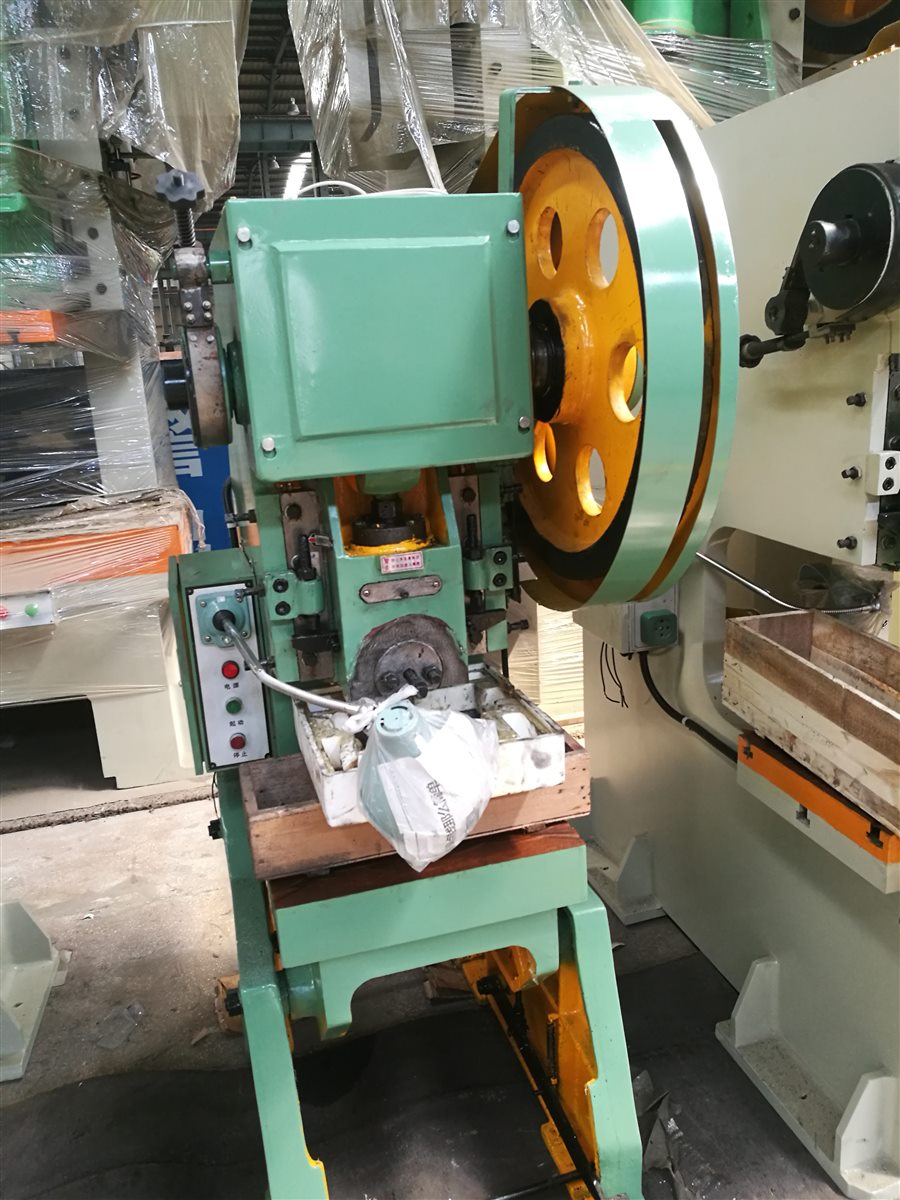
Choose the J21S open back inclinable press by matching tonnage to your heaviest blanking cut first, then confirming throat depth and stroke fit your die and part geometry. Work through these five checks:
Tonnage. Match nominal pressure to the shear area of your largest cut. The J21S range spans 100 kN (10T) to 1,250 kN (125T) — pick one step above your calculated requirement, not exactly at it.
Throat depth. The J21S-16T offers 420 mm and the J21S-63T through J21S-125T offer 500 mm. If parts must pass the frame, this dimension decides the machine.
Stroke and closing height. The J21S-16T has a 50 mm stroke and 180 mm maximum closing height; the J21S-125T has 130 mm stroke and 380 mm closing height. Deep-drawn parts need the larger figures.
Bed size. Workbench dimensions run from 650 mm left-to-right on the J21S-16T to 1,400 mm on the J21S-125T. Confirm your die shoe fits with room for clamping.
Motor and duty cycle. Motor power scales from 1.1 kW on the J21S-25T to 11 kW on the J21S-16T's heavier configuration. Continuous running demands headroom.
MINGCHENG, founded in 2012, manufactures the J21S series alongside shearing machines, press brakes and ironworkers at its 66,000 square metre plant in Dalian, with a team of 120 employees including 30 technical specialists. Buyers needing a single source for pressing, shearing and bending can review the full range at https://www.weldingcut.com/.
Key takeaway: specify tonnage from your blanking area, confirm the 420–500 mm J21S throat against your widest part, and verify stroke and closing height against die stack height before ordering.
Frequently Asked Questions
What is the difference between a J23 and a J21S open back inclinable press?
The J23 open back inclinable press has a tilting body and a shallow throat — 120 mm on the J23-16T. The J21S open back inclinable press uses a fixed body with a much deeper throat, 420 mm on the J21S-16T and 500 mm on larger models, so the J21S accepts wider workpieces that will not fit between the uprights of a J23 press.
What tonnage J21S press do I need for 2 mm mild steel?
Calculate the blanking perimeter multiplied by material thickness and shear strength, then add roughly 20 percent margin. For most 2 mm mild steel work, a 400 kN to 630 kN model such as the J21S-63T covers typical blanking and forming. Confirm the exact figure with the die designer before ordering, because die geometry changes the required force.
Can a J21S open back inclinable press run a progressive die?
A J21S open back inclinable press can run progressive dies, and the 420–500 mm throat depth is an advantage because wider coil stock feeds without hitting the frame. Stroke rate is fixed between 45 and 130 strokes per minute depending on tonnage, so progressive work suits batch production rather than continuous high-speed coil stamping.
How often does a J21S press need maintenance?
Service a J21S open back inclinable press on a fixed schedule: lubricate guideways and crankshaft bearings daily or per shift, inspect the clutch and brake weekly, and check closing-height adjustment and die clamping monthly. Annual inspection of the flywheel, clutch lining and electrical controls prevents the unplanned downtime that costs more than the maintenance itself.